
Exit

Author Archives: Leo Do

  1. Deoxidized vs. Electrolytic Copper

    Comments Off on Deoxidized vs. Electrolytic Copper

    Selecting the correct material requires a deep understanding of the differences between deoxidized copper and standard electrolytic copper to prevent component failure. Sequoia Brass & Copper supplies precise nonferrous alloys tailored for demanding fabrication workflows and heavy electrical infrastructure.

    Reviewing the distinct chemical compositions, physical properties, and industrial applications of these materials ensures optimal selection for your specific engineering requirements.
    Understanding Deoxidized Copper

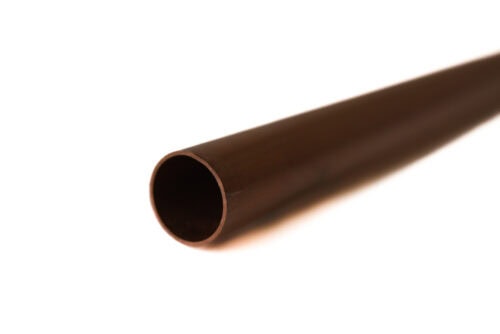
    Alloy C12200, commonly known as deoxidized copper, undergoes a specific refining process to alter its internal chemistry. Refiners add a small amount of phosphorus to the molten metal to extract residual oxygen before the casting phase.

    Material Properties and Thermal Stress Resistance

    Removing oxygen from the metal matrix prevents hydrogen embrittlement during high-temperature operations. When heated in a hydrogen-rich atmosphere, oxygen-bearing metals form steam pockets that rupture the solid metal lattice. The phosphorus addition stops this destructive reaction completely. The material withstands severe thermal stress without fracturing or forming internal gas pockets. This chemical adjustment also improves the overall ductility of the metal to support severe bending and deep drawing operations.

    Common Uses of Deoxidized Copper

    Welders and brazers select this metal because it reacts safely to direct open flames. The phosphorus content slightly lowers the overall electrical conductivity of the final product compared to purer alternatives. Consequently, fabricators choose this specific alloy for mechanical tasks that demand heavy forming and shaping over raw electrical transmission. It serves as the primary choice for any manufacturing process involving heavy thermal joining.

    Deoxidized Copper Applications

    This alloy is widely deployed across commercial and industrial environments to establish reliable fluid management systems:

    • Plumbing tubes. Chosen for domestic water lines and commercial HVAC networks to eliminate fluid leaks under pressure.
    • Industrial heat exchangers. Built into heavy-duty thermal management components that survive intense heat cycles in chemical processing plants.
    • Refrigeration coils. Leveraged to handle continuous condensation and extreme temperature drops within commercial cooling units.

    Understanding Electrolytic Copper

    Alloy C11000, widely recognized as electrolytic copper, features a minimum purity level of 99.90%. This standard material retains trace amounts of oxygen from the initial electrolytic refining phase.

    Electrical and Thermal Conductivity Advantages

    The exceptional purity of this alloy yields massive electrical and thermal conductivity. The material transfers heat away from sensitive electronics rapidly to stop premature hardware degradation. This pure metal also resists atmospheric corrosion naturally to maintain a clean surface finish over long operational lifespans. The inherent ductility allows operators to draw the metal into exceptionally thin wires without breaking the continuous strand.

    Primary Uses of Electrolytic Copper

    Engineers specify this alloy exclusively for power transmission and general electrical components. Machinists avoid welding this metal because the trapped oxygen causes severe structural degradation under intense heat. Assembly teams execute precise mechanical fastening methods, such as crimping or bolting, instead of brazing to join these parts safely.

    Electrolytic Copper Applications

    Technology firms and utility providers rely on high-purity electrolytic copper to build reliable electrical infrastructure:

    • Electrical bus bars. Transmit heavy electrical loads safely through critical power distribution networks.
    • Transformer windings. Transfer energy efficiently within high-voltage power grid hardware.
    • Telecommunication cables. Utilize high-purity wiring to preserve signal integrity across massive geographic distances.

    Contact Sequoia Brass & Copper to Learn More

    Matching the correct alloy to your manufacturing workflows prevents catastrophic field failures and unplanned downtime. Sequoia Brass & Copper supplies precision-cut deoxidized copper and high-purity electrolytic copper tailored to your exact engineering blueprints and production timelines.

    Request a quote and partner with our North American distribution team to streamline your industrial metal sourcing strategy.
  2. Soldering vs. Brazing

    Comments Off on Soldering vs. Brazing

    Metal joining is a foundational step across manufacturing, construction, electronics, and HVAC/R. Two of the most widely used processes are soldering and brazing. While both methods use a filler metal to bond components, they operate at distinct temperature ranges and produce joints with different mechanical properties.

    At Sequoia Brass & Copper, we have supplied copper, brass, and bronze alloys to fabricators and engineers across North America since 1983. Our ISO 9001:2015 certified team works with customers to match the right material to the right process. A common question we field is whether a given application calls for soldering or brazing, and the answer depends on more than temperature alone.

    Learn more about soldering vs. brazing, including how each process works, where each performs best, and which filler metals apply.

    Soldering

    Soldering is the lower-temperature of the two joining methods. It works across a broad set of materials and assembly types, making it a practical choice wherever heat sensitivity is a factor.

    Overview

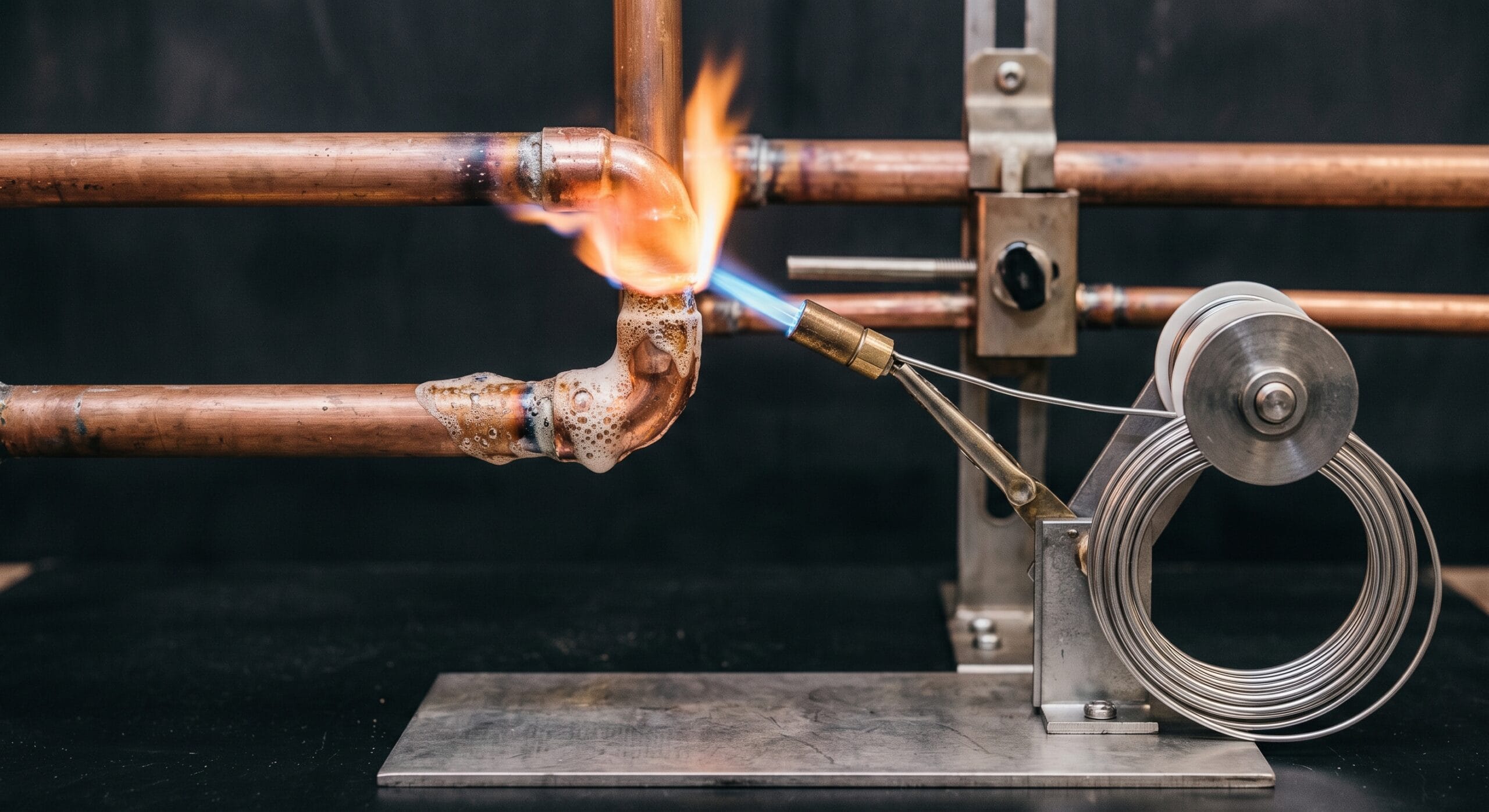
    The American Welding Society (AWS) defines soldering as a group of joining processes in which a filler metal with a liquidus below 840 °F (450 °C) flows into the joint by capillary action. The base metals stay solid throughout.

    Because temperatures stay below that threshold, the base material retains its temper and surface condition. Common filler metals include tin-lead and tin-silver alloys, selected based on the conductivity, corrosion resistance, or temperature requirements of the assembly.

    Benefits

    Soldering suits assemblies where thermal stress is a concern. Key advantages include:

    • Low process temperature. Heat stays below 840 °F (450 °C), so delicate substrates and sensitive components remain undamaged.
    • Simplified disassembly. The lower-strength bond allows technicians to separate components for rework or repair more easily than brazed joints.
    • Electrical conductivity. Tin-based solders form electrically conductive joints, which is why soldering is the standard joining method in electronics manufacturing.
    • Equipment simplicity. Soldering requires less specialized tooling, which reduces setup time and process cost for lower-volume or field applications.

    Applications

    Soldering appears most often in electronics assemblies, printed circuit boards, plumbing connections in residential and light commercial construction, HVAC refrigerant lines, and jewelry fabrication.

    Copper tubing remains one of the most common substrates for these assemblies. When specifying copper tubes or fittings, the specific alloy grade directly affects both filler metal wettability and long-term joint performance. To support these requirements, Sequoia Brass & Copper stocks a comprehensive inventory of copper products precision-suited for industrial and commercial plumbing.

    Brazing

    Brazing operates at higher temperatures and produces stronger joints. It is the preferred method when the assembly must withstand mechanical stress, elevated service temperatures, or demanding load conditions.

    Overview

    The American Welding Society (AWS) defines brazing by the same capillary-flow mechanism as soldering, but with one critical distinction: the filler metal has a liquidus temperature above 840 °F (450 °C) and below the solidus of the base metals. This elevated thermal threshold fundamentally alters the metallurgical outcome.

    Brazing filler metals, such as silver-based, copper-phosphorus, and aluminum-silicon alloys, bond with the base material to deliver joint strengths that can match or exceed the parent metal. To achieve these consistent structural results, the tight gap between mating surfaces is critical, ideally maintaining a joint clearance of 0.002 to 0.005” (0.05–0.13 mm) to optimize capillary action.

    Benefits

    Where soldering prioritizes accessibility and low heat, brazing delivers structural performance:

    • High joint strength. A properly brazed joint can equal or exceed the strength of the base metals, unlike soldered joints, which are typically weaker than the surrounding material.
    • Elevated service temperature. Brazed assemblies hold up well above 200 °F (93 °C), a threshold that solder-based bonds generally cannot sustain.
    • Leak-tight joints. Capillary flow fills the joint gap uniformly, producing connections that resist both pressure and vibration in fluid-handling systems.
    • Material versatility. Brazing joins dissimilar metals, including brass-to-copper and bronze-to-steel combinations, which widens its utility across mixed-alloy assemblies.

    Applications

    Brazing is standard in HVAC/R refrigerant piping, aerospace structural components, automotive heat exchangers, medical device assemblies, and industrial tooling where carbide tips are bonded to steel bodies.

    Brass and bronze components are frequent candidates because both alloys braze readily and appear across these sectors. Selecting the right base material is as important as selecting the process. Our brass alloy inventory and full product catalog cover many of the alloy grades most commonly specified for brazed assemblies.

    Contact Sequoia Brass & Copper to Learn More

    Understanding soldering vs. brazing comes down to service conditions: heat range, joint strength, substrate sensitivity, and pressure requirements. Once the process is set, the next step is the right alloy.

    Sequoia Brass & Copper stocks copper, brass, and bronze in the alloys, shapes, and sizes that fabricators actually need. With over 40 years of sourcing experience and an ISO 9001:2015 certified Quality Management System, we help customers match material to process from the start. Request a quote today.

Can’t Find What You Need?